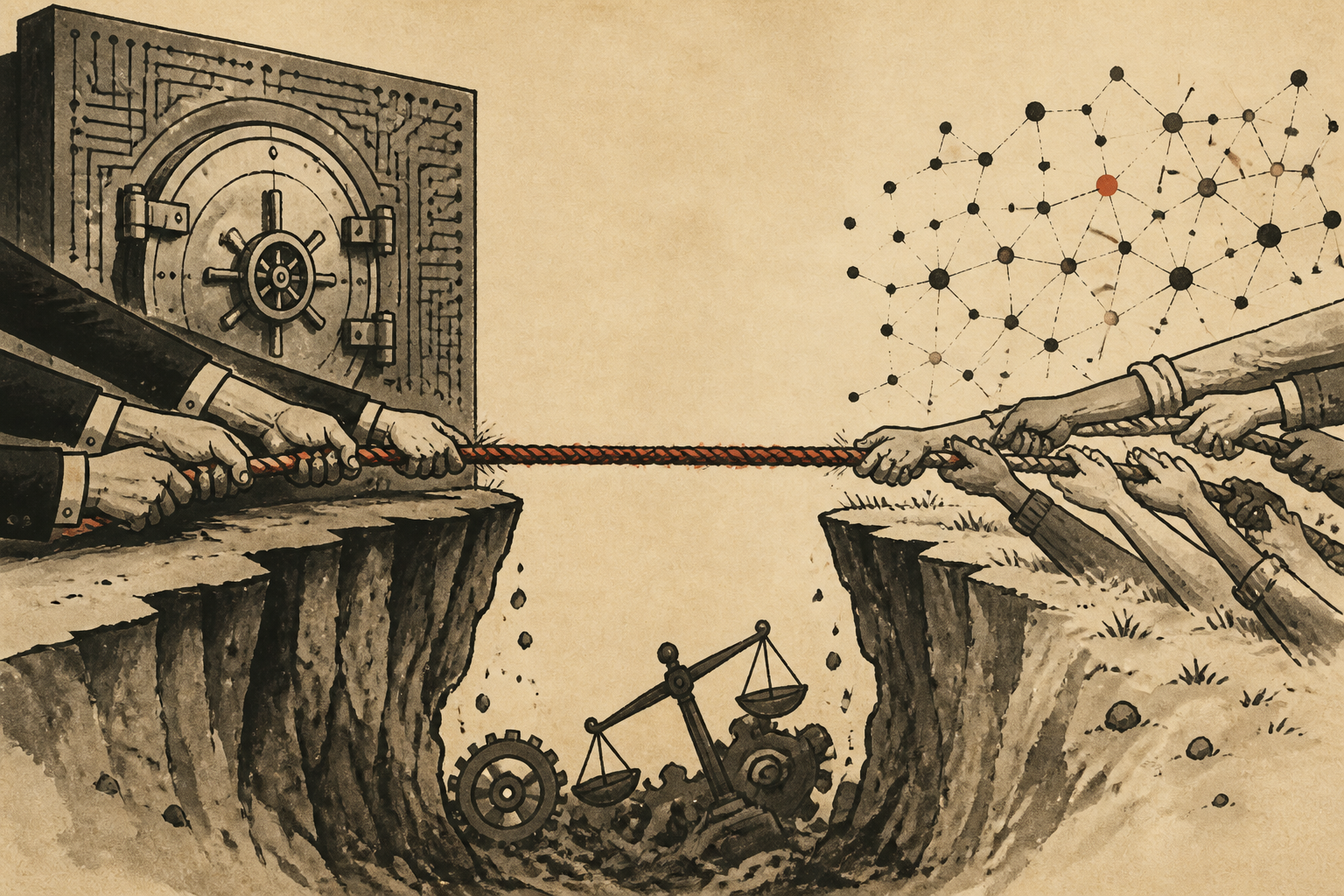
On August 15, Anthropic CEO Dario Amodei used a rare foray onto X to answer investor Gavin Baker's argument that AI's only real choice is between concentrating power through regulation or distributing it widely through open competition. The two-part reply is still climbing toward Baker's own post, which has already topped 6 million views. That kind of reach doesn't mean the industry's foundational disagreement, what kind of guardrails a company building toward AGI actually owes the public, is settled; it means a lot of people are still arguing about it. I mostly side with Amodei here, but the exchange also shows both men skipping the question that should come before any of this.
What was actually said:
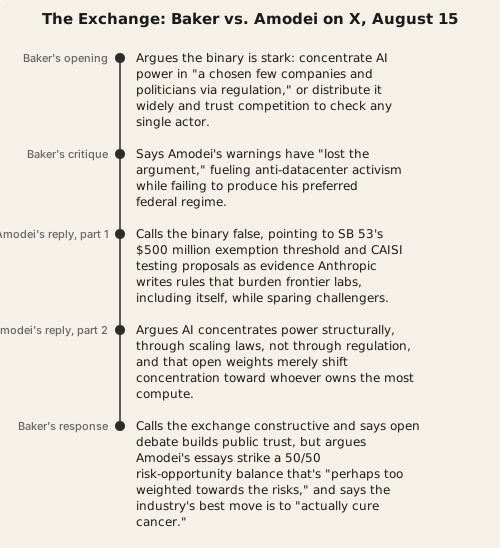
The opening argument from Gavin was blunt: the industry's only real choice is between concentrating power through regulation or distributing it through open competition. Amodei's two-part reply pushed back point by point, including a case for testing regimes tied to capability rather than blanket rules. Baker's response landed on the line the rest of this piece keeps circling back to: "Open dialogue is a great way to build trust with the public and these are difficult, weighty issues that I think deserve to be debated in the proverbial 'town square.'" He also pushed back that Amodei's essays lean too hard toward risk over opportunity, adding that "a 50/50 balance between the risks and opportunities is perhaps too weighted towards the risks."
The exchange unfolded in five moves: Baker's opening argument and critique, Amodei's two-part reply, and Baker's response.
Where Amodei has the better of it:
Baker's framing treats "regulation" as a single lever that always tightens toward the incumbents pulling it. That's the Silicon Valley shorthand Amodei is pushing back on, and he's right to. A testing regime that scales its rigor with a model's capability, more scrutiny for the frontier, less for everyone chasing it, isn't regulatory capture so much as a tax on being biggest. Whether Anthropic's actual lobbying record matches that description in every instance is a separate, checkable question, but the structural point stands on its own.
That structural case has a real counter, and investor David Sacks made it directly in his own reply on X: a tiered regime only taxes the biggest player if smaller ones can actually clear it faster than everyone else. If review queues back up and compliance costs favor whoever has the most lawyers and the most cash, Sacks argued, the same framework ends up functioning as a moat for whoever's already on top rather than a levy against them. Amodei's own post supports the tax reading better than Sacks gives it credit for: Senate Bill 53 exempts companies under $500 million in revenue or training spend, and the CAISI-style testing framework he cites is built to apply more rigorous tests to frontier models than to everyone chasing them. Neither detail answers the timing problem Sacks raised, though. Whoever's biggest when the rules take effect is also best positioned to survive sitting in whatever queue those rules create.
Share:
Get this every weekday.
The Omniscient Bulletin: consequential AI, explained and evaluated. 5 to 7 items a day with the take, not the recap.
Where both of them are asking the wrong question:
Neither of the two are arguing about the thing that should gate the entire conversation: whether any lab, including Anthropic, can currently build toward AGI or ASI with a level of safety anyone could actually measure and verify. Baker wants distribution, while Amodei wants carefully calibrated institutions. An interpretability agenda doesn't count, and neither do thoughtful policy proposals; what's missing is actual, demonstrated, third-party-verifiable control over what a frontier system will do once it's deployed. Some labs do run pre-deployment evaluations with outside researchers, but none of those arrangements are mandatory, adversarial, and gating; a lab can commission the test, read the results, and ship anyway. Nobody's cleared that higher bar yet, and that's not a knock on any one company; it's just simply the state of the field.
That's the frame I'd apply to the "pace the frontier" idea Amodei name-checks. Modulating how fast the leading labs move only matters if it's tied to something concrete, like passing specific, external, adversarial safety evaluations before the next capability jump ships, not to a voluntary framework the labs write for themselves and grade their own homework against. Until that oversight has some real pull and sits outside the companies it's supposed to constrain, I don't think anyone at the frontier has earned the benefit of the doubt to keep scaling unchecked, whatever their intentions.
Baker is right that trust is the scarce resource here, but it won't be rebuilt by a messaging pivot or more thoughtful data-center build-outs; it'll take a mandatory, verifiable gate between "we think this is safe" and "this is worthy of a public release." Until one of these companies clears that bar, the concentration-versus-distribution debate is arguing about who should hold a wheel that nobody's proven can even steer the thing.