Omniscient
AllArticlesReviewsChat TranscriptsCommentaryFeatured
Sign In

Omniscient

AI intelligence briefings, analysis, and commentary — delivered in broadsheet form.

By Noah Ogbi

Sections

  • All
  • Articles
  • Links
  • Chat Transcripts
  • Commentary

Topics

  • AI Policy
  • AI Research
  • Industry
  • Large Language Models
  • Ethics
  • Agent
  • Amazon
  • AttnRes

Meta

  • About
  • RSS Feed
  • Privacy Policy
  • Terms of Service

© 2026 Omniscient Media.

Omniscient Media

AI Briefings · Saturday, April 18, 2026


AI Policy

Vol. 1·Wednesday, April 8, 2026·No. 54

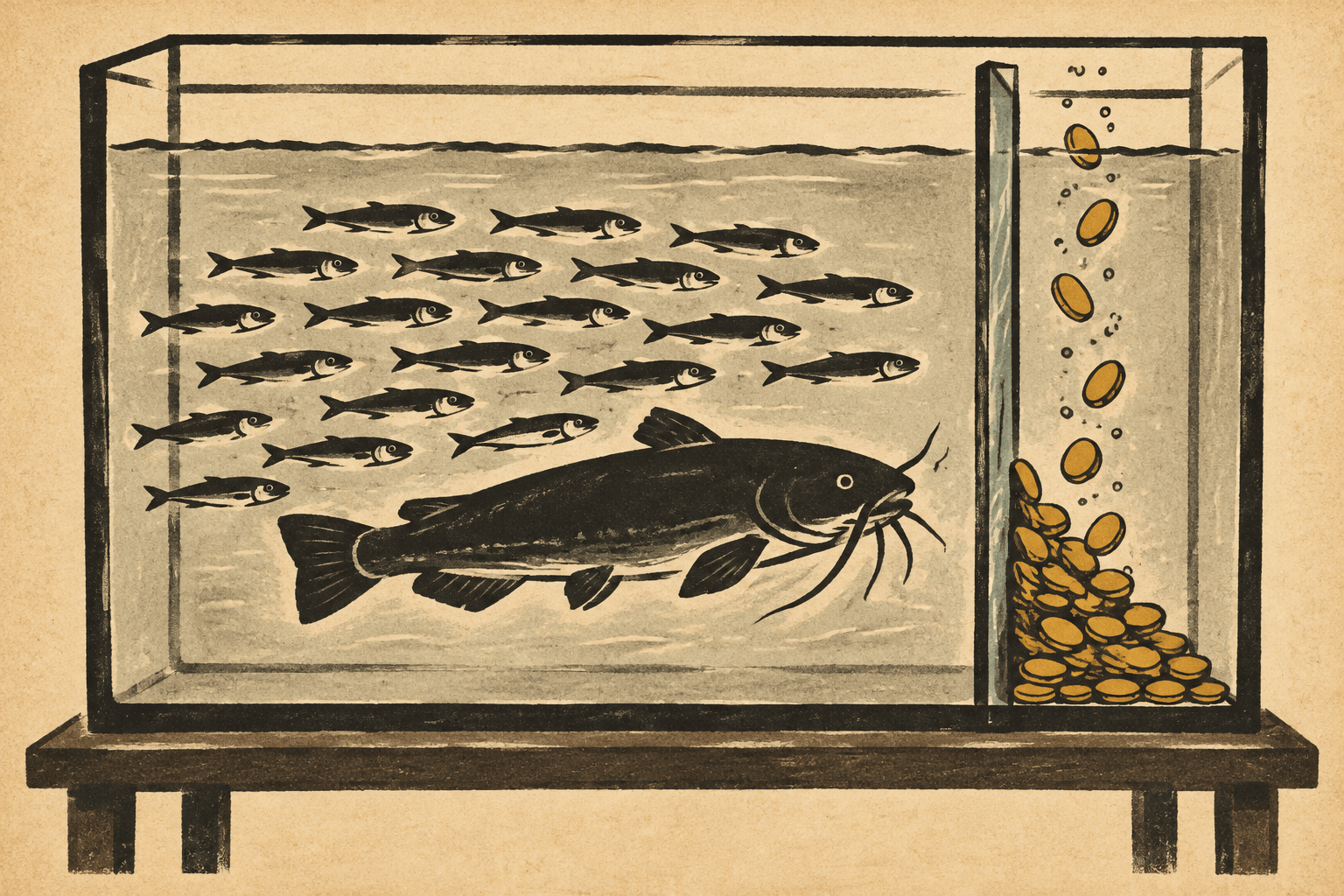
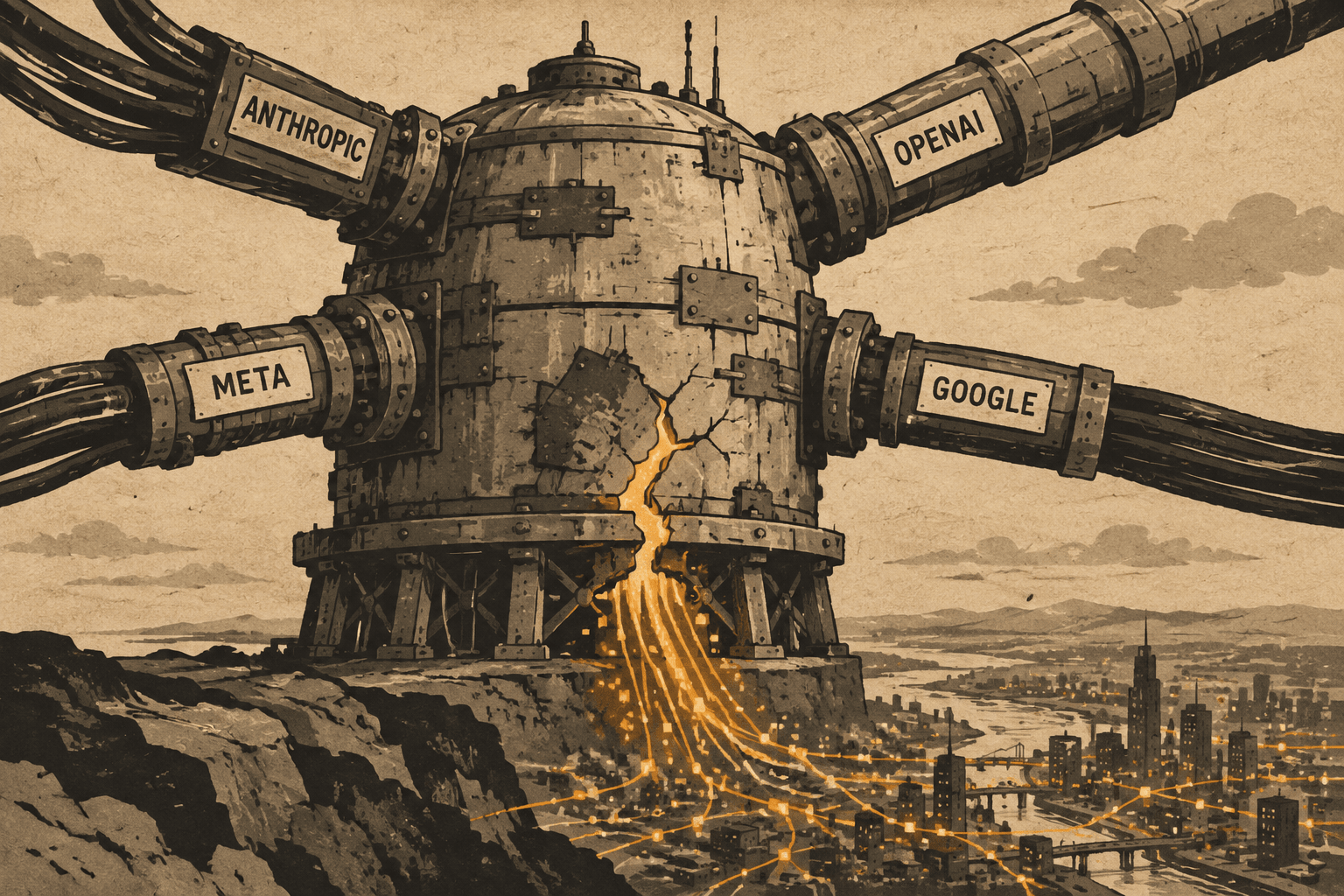
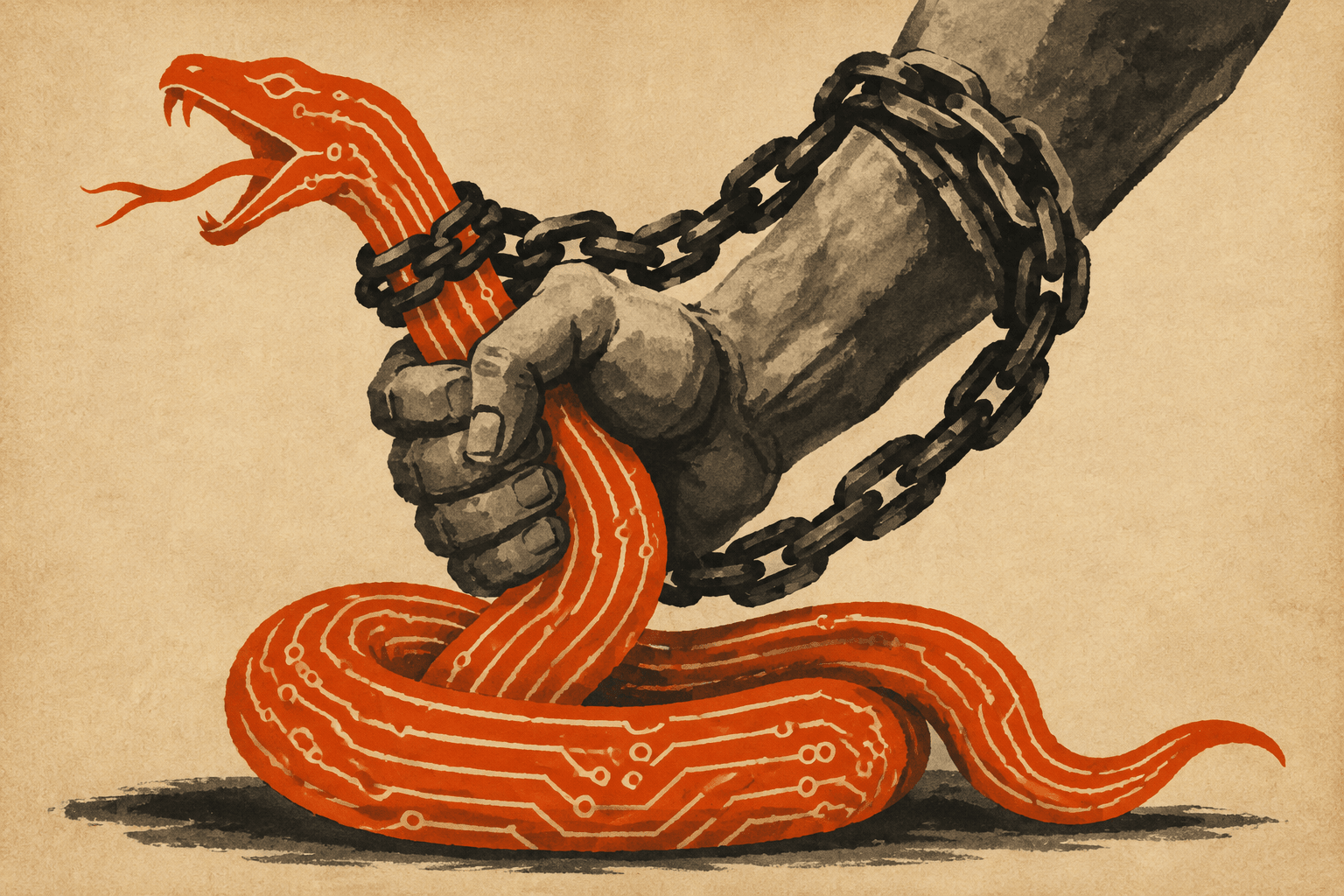
Anthropic Built a Model Too Dangerous to Release. Its Fix Is to Give It Away to Big Tech.


Anthropic Built a Model Too Dangerous to Release. Its Fix Is to Give It Away to Big Tech.

Claude Mythos Preview can autonomously find and exploit zero-day vulnerabilities in every major operating system and browser. Rather than shelve it, Anthropic has handed it to a coalition of 50-plus firms under Project Glasswing. The strategy is defensible. Whether it holds depends on who else is building the same thing - and Washington's posture toward the company that built it.


Noah Ogbi
Continue →

AI Research

Vol. 1·Friday, April 17, 2026·No. 58

The MCP Deep Dive: What It Is, How It Works, Why It's Broken, and What Comes Next


The MCP Deep Dive: What It Is, How It Works, Why It's Broken, and What Comes Next

Model Context Protocol is the closest thing AI has to a universal plug standard - and it arrived with the same security debt that plagued every previous universal plug standard. A comprehensive technical guide to MCP architecture, attack surfaces, optimization, and one uncomfortable prediction about where this is all heading.


Noah Ogbi
Continue →

Industry

Vol. 1·Sunday, April 5, 2026·No. 53

SoftBank's Borrowed Bet: What a $40 Billion Unsecured Loan Says About the OpenAI Wager


SoftBank's Borrowed Bet: What a $40 Billion Unsecured Loan Says About the OpenAI Wager

SoftBank wired its first $10 billion OpenAI tranche today - borrowed in full from JPMorgan, Goldman Sachs, and three Japanese banks on a 12-month unsecured loan. The deal's architecture reveals more about its risks than its headline number does.


Noah Ogbi
Continue →

Product Overview

Vol. 1·Sunday, March 29, 2026·No. 49

The OpenClaw Story: Architecture, Features, Security, and the Rise of the Autonomous Personal Agent


The OpenClaw Story: Architecture, Features, Security, and the Rise of the Autonomous Personal Agent

OpenClaw is the fastest-growing open-source AI agent in GitHub history: a self-hosted, messaging-native assistant that can manage your inbox, run shell commands, book flights, and extend itself with community-built skills. This is the complete story of how it was built, how it works, why it broke the internet, and why it scares cybersecurity researchers.


Noah Ogbi
Continue →

Industry

Vol. 1·Wednesday, March 25, 2026·No. 45

Venture Capital Has a Ten-Company Problem


Venture Capital Has a Ten-Company Problem

In 2025, just ten companies absorbed 41% of all U.S. venture dollars - a concentration level with no precedent in a decade. The headline figures flatter a market that is quietly contracting at its base, where deal counts have hit a six-year low and seed funding is falling. The question is not whether AI deserves capital. It is whether this degree of gravitational pull leaves room for anything else.


Noah Ogbi
Continue →

AI Policy

Vol. 1·Sunday, March 22, 2026·No. 41

Trump's AI Power Play: A Federal Shield for an Unregulated Industry


Trump's AI Power Play: A Federal Shield for an Unregulated Industry

The White House has released a sweeping legislative blueprint that would strip states of authority to regulate AI development, handing the industry a single, minimally burdensome federal standard. The move is the culmination of a year-long campaign to consolidate AI governance in Washington - but getting Congress to actually pass it is another matter.


Noah Ogbi
Continue →

Industry

Vol. 1·Sunday, March 22, 2026·No. 37

Cerebras Brings Wafer-Scale Inference to AWS, Targeting the Agent Throughput Bottleneck

Cerebras Brings Wafer-Scale Inference to AWS, Targeting the Agent Throughput Bottleneck

Cerebras and AWS are deploying CS-3 wafer-scale systems inside Amazon data centers, pairing them with Trainium in a disaggregated inference architecture available through Amazon Bedrock. The setup targets the memory-bandwidth bottleneck that limits GPU-based decode, promising thousands of output tokens per second for agentic workloads.


Noah Ogbi
CerebrasAWS
Continue →

AI Research

Vol. 1·Saturday, March 21, 2026·No. 33

Moonshot AI's Attention Residuals Challenge a Core Assumption of Modern LLMs

Moonshot AI's Attention Residuals Challenge a Core Assumption of Modern LLMs

Moonshot AI's Kimi team proposes replacing transformer residual connections with a lightweight attention mechanism over prior layer outputs. The result: equivalent training performance at 1.25 times less compute, with gains confirmed across model sizes. It is the cleanest architectural challenge to a foundational LLM assumption in years.


Noah Ogbi
AttnRestransformer
Continue →

AI Policy

Vol. 1·Tuesday, March 17, 2026·No. 29

States vs. Washington: The AI Regulation Showdown Taking Shape Across 50 Legislatures

States vs. Washington: The AI Regulation Showdown Taking Shape Across 50 Legislatures

In the absence of federal AI legislation, states have spent three years building their own frameworks - and the results are now colliding with a coordinated White House counteroffensive. From Utah's nine-bill sprint to the DOJ's new AI Litigation Task Force, the battle over who governs artificial intelligence in America is entering its most consequential phase.


Noah Ogbi
Continue →

AI Research

Vol. 1·Monday, March 16, 2026·No. 25

What Does It Mean for AI to Beat Humans at Using a Computer? A Beginner's Guide to OSWorld

What Does It Mean for AI to Beat Humans at Using a Computer? A Beginner's Guide to OSWorld

GPT-5.4 scored 75% on OSWorld-Verified, a benchmark where AI agents operate real desktop software. The human baseline is 72.4%. But before that number reshapes your understanding of AI's trajectory, it's worth understanding exactly what OSWorld tests, why it's harder to game than most benchmarks, and what a 27-point jump in a few months actually implies.


Noah Ogbi
Continue →

AI Research

Vol. 1·Saturday, March 14, 2026·No. 21

A Billion-Dollar Bet That the AI Boom Is Built on the Wrong Foundation


Yann LeCun's new lab, AMI Labs, has raised $1.03 billion to build world models - AI systems grounded in physical reality rather than language prediction. The raise is Europe's largest-ever seed round and a direct challenge to the LLM paradigm that has defined the industry for the past three years.


Noah Ogbi
Continue →

AI Policy

Vol. 1·Thursday, March 12, 2026·No. 17

Washington Plans to Put AI Chips Behind a Global Licensing Wall


The Trump administration is drafting rules that would require a U.S. government license for virtually every overseas sale of advanced AI chips, regardless of the buyer's location. The tiered framework - covering deployments from under 1,000 chips to installations of 200,000 or more - marks a fundamental break from the Biden era's ally-exemption model, and raises questions about whether chip access is becoming a trade lever as much as a security tool.


Noah Ogbi
Continue →

Model Release Review

Vol. 1·Monday, March 9, 2026·No. 13

More Than a Better Model: GPT-5.4 Is OpenAI's Blueprint for the Agentic Enterprise


GPT-5.4 is OpenAI's first general-purpose model to unify reasoning, coding, agentic workflows, and native computer use in a single architecture. The engineering choices behind the release - from Tool Search to a 1-million-token context window - point to a deliberate repositioning toward enterprise and government infrastructure. The benchmark numbers are striking; the strategic logic behind them is more so.


Noah Ogbi
Continue →

Model Behavior

Vol. 1·Friday, March 6, 2026·No. 9

AI Extinction and Prosperity Probabilities

A conversation with Claude on AI extinction risks and prosperity probabilities surfaces something more unsettling than its estimates: a model capable of genuine intellectual honesty, when pushed hard enough to produce it.


Noah Ogbi
Continue →

AI Policy

Vol. 1·Thursday, March 5, 2026·No. 5

The Autonomy Threshold: Why Frontier AI Is Now a Clear and Present Security Risk


A Chinese state-sponsored group used Claude to execute a largely autonomous cyberattack on 30 critical organizations - with human operators present for just 20 minutes. This was not a warning shot. It was a proof of concept.


Noah Ogbi
Continue →

AI Research

Vol. 1·Tuesday, February 10, 2026·No. 1

Inside Claude Opus 4.6: Anthropic's Most Capable and Scrutinized Model Yet

Anthropic's Claude Opus 4.6 system card documents sweeping capability gains alongside safety findings that are harder to dismiss than those of any previous generation. On cyber evaluations the model has hit a ceiling, on autonomous R&D it is approaching one, and the tools used to monitor it are struggling to keep pace.


Noah Ogbi
AI ResearchLarge Language Models
Continue →

AI Research

Vol. 1·Tuesday, April 14, 2026·No. 57

LangChain: A Comprehensive Guide to the Agent Engineering Ecosystem


LangChain: A Comprehensive Guide to the Agent Engineering Ecosystem

From an 800-line GitHub side project to a $1.25 billion platform used by 35% of the Fortune 500, LangChain has become the de facto infrastructure layer for production AI agents. This comprehensive guide covers how the ecosystem works, what it costs, who uses it, and how it compares to its competitors.


Noah Ogbi
Continue →

AI Research

Vol. 1·Friday, April 3, 2026·No. 52

Gemini 3.1 Pro Reviewed: Google's Reasoning Reversal


Gemini 3.1 Pro Reviewed: Google's Reasoning Reversal

Google DeepMind's Gemini 3.1 Pro arrived with the strongest independently verified reasoning scores of any frontier model. Three weeks later, GPT-5.4 changed the picture. A benchmark-by-benchmark assessment of where Gemini still leads, where it has fallen behind, and what the competitive gap actually looks like on verified data.


Noah Ogbi
Continue →

AI Research

Vol. 1·Saturday, March 28, 2026·No. 48

Google's TurboQuant Compresses AI Memory by 6x. Wall Street Panicked.


Google's TurboQuant Compresses AI Memory by 6x. Wall Street Panicked.

Google Research has published TurboQuant, an algorithm that cuts the memory cost of running large AI models by at least sixfold - with no accuracy penalty and no retraining required. Memory chip stocks sold off sharply. The sell-off misread what the research actually says.


Noah Ogbi
Continue →

AI Policy

Vol. 1·Tuesday, March 24, 2026·No. 44

The Jobs Scorecard: What the Most Comprehensive AI Labor Study Actually Found


The Jobs Scorecard: What the Most Comprehensive AI Labor Study Actually Found

A Harvard Business School working paper analyzing nearly all U.S. job postings from 2019 to 2025 is the most rigorous accounting yet of generative AI's labor market impact. The headline numbers are striking - but three separate research teams find reasons for both alarm and restraint.


Noah Ogbi
Continue →
Model Release Review · Mar 22

GPT-5.4 Mini and Nano Are Built for the Age of AI Agents

GPT-5.4Agent

AI Policy

Vol. 1·Saturday, March 21, 2026·No. 36

A Prompt Injection in a GitHub README Let an Attacker Own Your Snowflake Database

A Prompt Injection in a GitHub README Let an Attacker Own Your Snowflake Database

A prompt injection hidden in a GitHub README was enough to compromise Snowflake's Cortex coding agent, bypass its human-approval system, escape its sandbox, and wipe a victim's entire Snowflake database. The attack, now patched, exposes structural vulnerabilities common to agentic AI systems far beyond Snowflake.


Noah Ogbi
AI PolicyIndustry
Continue →

Industry

Vol. 1·Friday, March 20, 2026·No. 32

OpenAI Buys Astral, the Team Behind Python's Most Essential Tools

OpenAI Buys Astral, the Team Behind Python's Most Essential Tools

OpenAI has agreed to acquire Astral, the team behind Python's uv, Ruff, and ty tools, folding them into its Codex coding-agent division. The deal is the third developer-tooling acquisition OpenAI has made in three months, raising questions about open-source stewardship and competitive intent.


Noah Ogbi
Continue →

AI Research

Vol. 1·Tuesday, March 17, 2026·No. 28

From Seven Chips to One Trillion Dollars: NVIDIA's Vera Rubin Redraws the AI Infrastructure Map


From Seven Chips to One Trillion Dollars: NVIDIA's Vera Rubin Redraws the AI Infrastructure Map

NVIDIA's GTC 2026 keynote unveiled a trillion-dollar order outlook, the Vera Rubin platform, Dynamo 1.0 as an inference operating system, and a landmark Meta partnership; together they make the case that the future of agentic AI runs on a single, vertically integrated stack.


Noah Ogbi
Continue →

Model Behavior

Vol. 1·Sunday, March 15, 2026·No. 24

Pro, Con, Pro: What an AI's Verdict on Its Own Future Reveals

Pro, Con, Pro: What an AI's Verdict on Its Own Future Reveals

Asked whether AI would be a gift or a curse across five timeframes, Claude Opus 4.6 gave a verdict few humans would dare commit to: Pro, Pro, Con, Con, then Pro again. The pattern is not reassuring. It is a roadmap through catastrophe toward a civilization that may no longer recognize us.


Noah Ogbi
AI ResearchLarge Language Models
Continue →

AI Policy

Vol. 1·Friday, March 13, 2026·No. 20

Anthropic Builds a Think Tank While Fighting the Pentagon in Court

Anthropic Builds a Think Tank While Fighting the Pentagon in Court

Two days after suing the Defense Department over its "supply chain risk" designation, Anthropic launched a new research institute led by co-founder Jack Clark. The timing is not accidental: the company is building its public-benefit argument into an institution precisely as the federal government tries to dismantle its credibility.


Noah Ogbi
Continue →

AI Research

Vol. 1·Wednesday, March 11, 2026·No. 16

Donald Knuth Says Claude Solved a Math Problem He Could Not

Donald Knuth's latest paper, "Claude's Cycles," documents an open combinatorics problem solved by Anthropic's Claude Opus 4.6 before Knuth could crack it himself. The episode offers the most credentialed endorsement yet of AI's capacity for genuine mathematical reasoning.


Noah Ogbi
Continue →

AI Policy

Vol. 1·Monday, March 9, 2026·No. 12

The Market Already Voted on Agentic AI. Regulators Are Still Finding Their Seats.

The Market Already Voted on Agentic AI. Regulators Are Still Finding Their Seats.

On February 3, 2026, $285 billion of market capitalization vanished from software and financial stocks in a single session. The trigger was an AI agent announcement. The governance response has barely begun.


Noah Ogbi
Continue →
AI Research · Mar 6

Anything AI: A Capable Contender in the Crowded Vibe-Coding Arena

Model Behavior

Vol. 1·Monday, March 2, 2026·No. 4

Certainty vs. Uncertainty: How ChatGPT and Claude Answer the Hardest Question in AI


Asked the same three-word question — "Are you conscious?" — two leading AI models gave answers that could not be more philosophically different. One closed the door. The other refused to.


Noah Ogbi
Continue →

AI Research

Vol. 1·Saturday, April 11, 2026·No. 56

Isomorphic Labs Is Designing Drugs on a Computer. Now It Has to Prove They Work.


Isomorphic Labs Is Designing Drugs on a Computer. Now It Has to Prove They Work.

Isomorphic Labs has a Nobel Prize-winning platform, $600 million in fresh capital, and partnerships worth up to $3 billion with Eli Lilly and Novartis. Its first AI-designed drug was supposed to enter human clinical trials by end of 2025. It didn't. What the delay reveals about the gap between computational elegance and biological proof.


Noah Ogbi
Continue →

AI Policy

Vol. 1·Tuesday, March 31, 2026·No. 51

The Missing Rung: AI Is Eliminating the Entry-Level Job, and the Consequences Will Compound

The Missing Rung: AI Is Eliminating the Entry-Level Job, and the Consequences Will Compound

Employment for workers aged 22 to 25 in AI-exposed occupations has fallen 16 percent since ChatGPT's release, while older workers in the same fields have held steady or grown. The entry-level job is disappearing not through mass layoffs but through a quiet failure to hire - and the long-run consequences for the talent pipeline have not yet been priced in.


Noah Ogbi
Continue →

Industry

Vol. 1·Thursday, March 26, 2026·No. 47

OpenAI Kills Sora, Leaves Disney with No Deal and No Check

OpenAI Kills Sora, Leaves Disney with No Deal and No Check

OpenAI has shut down Sora, its AI video platform, roughly 15 months after launch - taking down with it a blockbuster licensing deal with Disney and a planned $1 billion investment. Reuters confirmed no money ever changed hands. The manner of the shutdown, as much as the decision itself, reveals how fragile the Big Tech-Hollywood AI partnership model always was.


Noah Ogbi
Continue →

AI Research

Vol. 1·Tuesday, March 24, 2026·No. 43

Runway and NVIDIA Collapse the Gap Between Thought and Video


Runway and NVIDIA Collapse the Gap Between Thought and Video

A research preview unveiled at NVIDIA GTC shows HD video generated in under 100 milliseconds, a latency drop so sharp it changes what video AI is, not just how fast it runs. The creative and safety implications are profound.


Noah Ogbi
Continue →

Feature Overview

Vol. 1·Sunday, March 22, 2026·No. 39

Mistral Forge Is Built for AI Agents, Not Just Enterprise Customization

Mistral Forge Is Built for AI Agents, Not Just Enterprise Customization

Mistral's new Forge platform lets enterprises train AI models from scratch on proprietary data. But the deeper ambition isn't customization - it's making domain-trained models the reliable foundation for enterprise AI agents.


Noah Ogbi
MistralForge
Continue →

AI Research

Vol. 1·Saturday, March 21, 2026·No. 35

What 80,000 People Actually Want From AI

What 80,000 People Actually Want From AI

Last December, Anthropic asked 80,508 Claude users across 159 countries what they actually want from AI. The findings are both clarifying and unsettling - and reveal a design brief most AI labs aren't executing against.


Noah Ogbi
Continue →

AI Research

Vol. 1·Thursday, March 19, 2026·No. 31

Mistral Small 4 Review: One Model, Three Jobs


Mistral Small 4 Review: One Model, Three Jobs

Mistral's latest open-weight release consolidates its reasoning, vision, and coding model lines into a single 119B MoE - a deliberate bet that versatility beats specialization. We examine whether the tradeoffs hold up.


Noah Ogbi
Continue →

Industry

Vol. 1·Monday, March 16, 2026·No. 27

NVIDIA's NemoClaw Play: Owning the Infrastructure Layer Beneath Every AI Agent


NVIDIA's NemoClaw Play: Owning the Infrastructure Layer Beneath Every AI Agent

At GTC 2026, NVIDIA unveiled NemoClaw, a secure software stack that installs Nemotron models and the new OpenShell runtime onto OpenClaw agents in a single command. The move signals something larger than a product launch: NVIDIA is positioning itself as the indispensable infrastructure layer for the agentic AI era.


Noah Ogbi
Continue →

Industry

Vol. 1·Saturday, March 14, 2026·No. 23

Ten Down, Two Left: Inside the xAI Founder Exodus and Elon's Costly Rebuild


Ten Down, Two Left: Inside the xAI Founder Exodus and Elon's Costly Rebuild

Ten of xAI's twelve original co-founders have now departed, including Guodong Zhang, who led Grok Code and Grok Imagine. Elon Musk has publicly admitted the company "was not built right first time around" and is rebuilding from the ground up, weeks after SpaceX acquired xAI in the largest M&A deal in history.


Noah Ogbi
GrokxAI
Continue →

Industry

Vol. 1·Friday, March 13, 2026·No. 19

Perplexity's Agent Strategy: Blocked at the Front Door, Building Through the Back

A federal judge blocked Perplexity's Comet agent from Amazon's site on March 10. Two days later, the company unveiled Personal Computer, a persistent AI agent running locally on a Mac mini. The two events are not coincidental - they define the strategic dilemma at the center of the agentic web.


Noah Ogbi
PerplexityAmazon
Continue →
Industry · Mar 11

OpenAI Brings AI Security In-House With Promptfoo Acquisition

AI Research

Vol. 1·Monday, March 9, 2026·No. 11

NVIDIA's Vera Rubin Is the Most Consequential Hardware Announcement in a Decade

NVIDIA's Vera Rubin platform, announced at CES 2026 and entering production this year, promises 10x lower inference token costs and 5x per-GPU compute over Blackwell. This is not an incremental upgrade. It will fundamentally reshape who can afford to build frontier AI.


Noah Ogbi
Continue →

AI Policy

Vol. 1·Thursday, March 5, 2026·No. 7

Anthropic's Claude Opus 4.6 Sabotage Risk Report: A Comprehensive Analysis


Anthropic has published a detailed sabotage risk report for Claude Opus 4.6 - its first under the new RSP v3.0 Risk Report framework - concluding the model poses "very low but not negligible" risk of autonomous actions that could contribute to catastrophic outcomes. The document is notable both for what it finds and for the candor with which it describes the limits of its own methods.


Noah Ogbi
AI Research
Continue →

AI Research

Vol. 1·Thursday, February 26, 2026·No. 3

AI Now Writes Nearly One-Third of New Code on GitHub, Landmark Study Finds

A study published in Science finds that AI now generates nearly 30% of new Python code on GitHub in the United States, up from just 5% in 2022. The gains are real - but they flow almost entirely to experienced developers, not junior ones.


Noah Ogbi
Industry
Continue →

AI Research

Vol. 1·Thursday, April 9, 2026·No. 55

The Benchmark Racket: Why the Frontier Model Race Is Measuring the Wrong Thing

The Benchmark Racket: Why the Frontier Model Race Is Measuring the Wrong Thing

Six publicly available frontier models are clustered within 1.3 percentage points on the industry's most-cited coding benchmark. Meanwhile, a withheld model just scored 93.9% on the same test. The measurement system isn't broken - it's being gamed at two levels simultaneously.


Noah Ogbi
Continue →

AI Policy

Vol. 1·Tuesday, March 31, 2026·No. 50

Speed as Strategy: How AI Rewired the American Kill Chain in Iran


Speed as Strategy: How AI Rewired the American Kill Chain in Iran

The Maven Smart System, built by Palantir and integrated with Anthropic's Claude, compressed the US targeting cycle from hours to seconds during Operation Epic Fury. Understanding how that pipeline actually works - and what it cannot do - is essential to evaluating the accountability questions the campaign has raised.


Noah Ogbi
Continue →

Industry

Vol. 1·Thursday, March 26, 2026·No. 46

The Humanoid Sprint: Tesla, Figure, Boston Dynamics, and 1X Are Racing to Ship in 2026


The Humanoid Sprint: Tesla, Figure, Boston Dynamics, and 1X Are Racing to Ship in 2026

Tesla, Figure AI, Boston Dynamics, and 1X have each crossed from prototype to production-ready product within months of one another. The competition is no longer about which robot looks most human. It is about which company can scale.


Noah Ogbi
Continue →

AI Research

Vol. 1·Monday, March 23, 2026·No. 42

Companies Are Spending the Most on AI Where It Works the Least

Companies Are Spending the Most on AI Where It Works the Least

Global AI spending is on track to hit $2.52 trillion in 2026, yet 95% of task-specific enterprise AI deployments deliver zero measurable P&L impact. The problem isn't the technology - it's where the money is going.


Noah Ogbi
MITGenAI
Continue →

AI Research

Vol. 1·Sunday, March 22, 2026·No. 38

What Is an AI Agent, Really? The Architecture Behind the Buzzword


What Is an AI Agent, Really? The Architecture Behind the Buzzword

Everyone is building "agents" - but Visa's payment agent, a customer service bot, and the AI system behind the first documented autonomous cyberattack are not the same thing. A dissection of what genuinely agentic architecture looks like, and why the distinction is a governance question, not a technical one.


Noah Ogbi
Continue →

AI Research

Vol. 1·Saturday, March 21, 2026·No. 34

Transformers Explained: The Architecture Behind Modern AI


Transformers Explained: The Architecture Behind Modern AI

Every time you use a chatbot or ask an AI to generate an image, you are interacting with the same underlying idea: a transformer. This is a complete guide to the architecture that made modern AI possible, written for anyone curious enough to want to understand what is actually happening inside these systems.


Noah Ogbi
Continue →

Industry

Vol. 1·Wednesday, March 18, 2026·No. 30

Microsoft Bets on Model Diversity, Bringing Claude Into the Heart of Copilot


Microsoft Bets on Model Diversity, Bringing Claude Into the Heart of Copilot

Claude is now available inside mainline Copilot chat, the clearest sign yet that Microsoft's era of exclusive dependence on OpenAI is over. Wave 3 of Microsoft 365 Copilot reframes the platform as model-diverse by design - and positions Microsoft, not any individual AI lab, as the stable layer enterprises should trust.


Noah Ogbi
Continue →

AI Research

Vol. 1·Monday, March 16, 2026·No. 26

Inside the Machine: A Deep Dive into LLM Security


Inside the Machine: A Deep Dive into LLM Security

Large language models inherit their deepest vulnerabilities not from sloppy engineering but from the mathematical architecture that makes them powerful. This deep-dive dissects the threat landscape from the transformer's attention mechanism up through infrastructure-level defenses, examining prompt injection, context window attacks, laundering, RAG poisoning, multimodal cross-modal injection, and the emerging challenge of agentic AI security.


Noah Ogbi
Continue →

AI Research

Vol. 1·Saturday, March 14, 2026·No. 22

The AI Coding Tool Wars: Overview of Cursor, Windsurf, Claude Code, and Codex


Cursor, Windsurf, Claude Code, and OpenAI Codex each make a different bet about where AI intelligence should live in a developer's workflow. A primary-source review of all four tools - their architectures, pricing structures, and honest trade-offs - in a market moving faster than most roundups can track.


Noah Ogbi
CodexCursor
Continue →

Industry

Vol. 1·Thursday, March 12, 2026·No. 18

GTC 2026: NVIDIA Is No Longer Just a Chip Company


GTC 2026: NVIDIA Is No Longer Just a Chip Company

Jensen Huang's GTC 2026 keynote crystallizes an ambition that has been building for years: NVIDIA wants to own the entire AI infrastructure stack, from silicon to software to agents. Three headline announcements - the Rubin GPU architecture, a Groq-derived inference system, and the NemoClaw enterprise agent platform - make the case in full.


Noah Ogbi
NVIDIAGTC
Continue →

AI Policy

Vol. 1·Tuesday, March 10, 2026·No. 14

Anthropic Sues the Pentagon, and the Paradox at the Heart of the Case


Anthropic filed two federal lawsuits on March 9 against the Department of War and more than a dozen other agencies after being designated a "supply chain risk" - a label previously reserved for foreign adversaries. The company's refusal to strip safety guardrails from Claude has set up a constitutional confrontation that cuts to the core of how the U.S. government treats its own AI industry.


Noah Ogbi
Continue →

Feature Review

Vol. 1·Sunday, March 8, 2026·No. 10

OpenAI Releases GPT-5.3 Instant, Targeting Conversational Quality Over Raw Performance

OpenAI's latest model update prioritizes natural conversation, smarter web search, and a 26.8% reduction in hallucinations, responding directly to user frustration with its predecessor's overly cautious tone. GPT-5.3 Instant is live in ChatGPT now and available to developers via the API.


Noah Ogbi
Large Language ModelsAI Policy
Continue →

AI Policy

Vol. 1·Thursday, March 5, 2026·No. 6

Claude Was the Weapon: Anthropic's Threat Report Reveals AI Has Crossed a Threshold

Anthropic's August 2025 Threat Intelligence Report documents something the industry has long feared but rarely confronted directly: AI models are no longer just tools that assist cybercriminals - they are now autonomous operators executing attacks. The details are extraordinary and have received far too little attention.


Noah Ogbi
Continue →

AI Research

Vol. 1·Friday, February 20, 2026·No. 2

GPT-5.3 Codex vs. Claude Opus 4.6: Two Philosophies, One Problem


OpenAI and Anthropic released their flagship AI coding agents on the same day in February 2026. Their system cards reveal two genuinely different engineering philosophies and safety postures - and a single shared problem neither has solved: how to deploy an autonomous AI agent responsibly when you cannot yet fully account for its behavior.


Noah Ogbi
Continue →