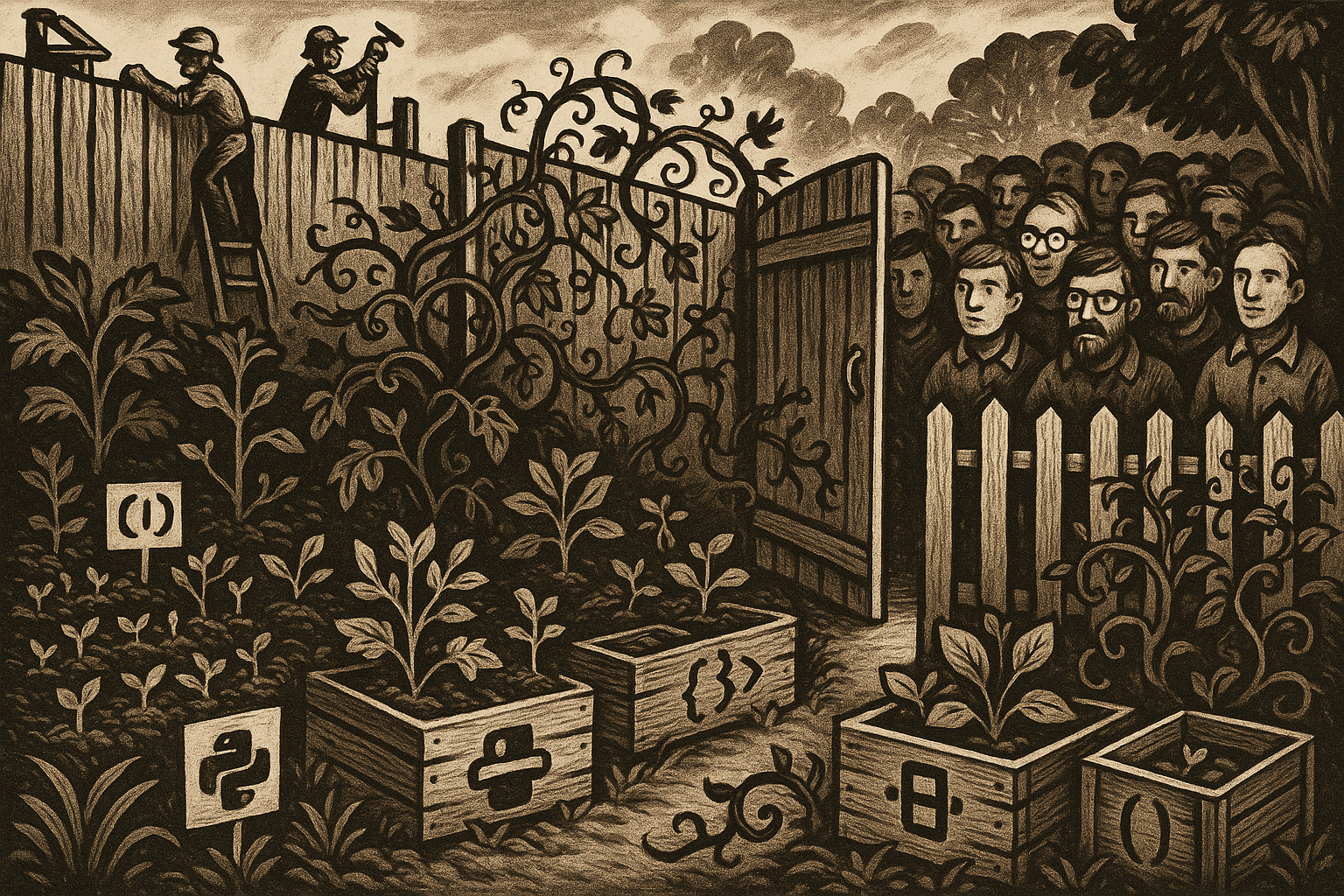
OpenAI has agreed to acquire Astral, the company responsible for three of the Python ecosystem's most widely adopted open-source tools: uv, the package and environment manager downloaded more than 126 million times last month; Ruff, a fast Python linter and formatter; and ty, a Python type checker.[1] After the deal closes, subject to regulatory approval, the Astral team will join OpenAI's Codex group.
The acquisition signals something more deliberate than a simple talent grab. Codex, OpenAI's coding agent, has grown to over two million weekly active users, with usage up fivefold since the start of 2026.[2] An AI that writes code but cannot reliably manage dependencies, lint its own output, or type-check what it produces is an AI operating with one hand tied behind its back. Astral's tools address exactly those gaps.
The Strategic Logic
OpenAI framed the deal in terms of expanding what AI can do "across the software development lifecycle" - not merely code generation, but the full chain of planning, tooling, and verification.[1] The phrase is pointed: it is a direct articulation of why static code-generation tools are insufficient for agentic workflows, and why ownership of the underlying toolchain matters.
Astral founder and CEO Charlie Marsh described the move as an extension of the company's core mission. "We'll keep building in the open, alongside our community - and for the broader Python ecosystem - just as we have from the start," he wrote.[3] OpenAI echoed the commitment: the tools will remain open source after closing.
The competitive subtext is hard to miss. Anthropic acquired the Bun JavaScript runtime in December 2025, a move that secured a key dependency for Claude Code and brought Bun's engineering team in-house to accelerate its development.[3] OpenAI is making a structurally similar bet - that controlling the tooling layer confers durable advantages in the coding-agent race, where Codex and Claude Code are in direct competition for developer subscription revenue.
An Acquihire With Caveats
The community response has been a mixture of admiration for Astral's work and skepticism about its future. A recurring read across Hacker News and Reddit threads is that this was effectively an acquihire: Astral had no revenue model and was reportedly approaching the end of its runway, and its tools are permissively licensed, meaning OpenAI was paying primarily for the engineers.[3]
The concern is not that uv or Ruff will disappear - their Apache and MIT licenses make forking straightforward - but that their roadmaps will quietly bend toward Codex's priorities rather than the broader Python community's. One widely cited Hacker News comment captured the worry succinctly: if the Astral team is working on Codex, who is working on the tools? OpenAI's own announcement offered an inadvertent answer: "Codex."
Developer Simon Willison noted that uv, in particular, has become "load-bearing" infrastructure for the Python ecosystem - a tool millions of developers and agents depend on daily.[3] The permissive licensing provides a credible worst-case exit (fork and continue), but whether a community fork could sustain Astral's pace of development is an open question. Astral's Douglas Creager acknowledged the dynamic directly: the team remains committed, but "no one can guarantee how motives, incentives, and decisions might change years down the line."[3]
The Bigger Pattern
This is OpenAI's third developer-tooling acquisition in roughly three months, following Promptfoo and the hiring of OpenClaw creator Peter Steinberger, whose project is being spun off to a foundation rather than absorbed outright.[3] The pattern is consistent with a strategy sometimes described as "commoditize your complements": owning the tools developers already use creates gravitational pull toward the platform those tools serve. Microsoft's trajectory with VS Code - a free editor that became a vehicle for paid AI features - is a precedent many in the Python community have invoked, whether favorably or not.
Whether OpenAI treats Astral's tools as a community asset or folds them into Codex's commercial orbit will be a meaningful early test of how the company manages open-source stewardship at scale. The tools are excellent. The incentives, going forward, are more complicated.
Sources