Industry
Tim Cook's Exit and the Company He Leaves Behind
Tips, corrections, or questions? support@omniscient.media
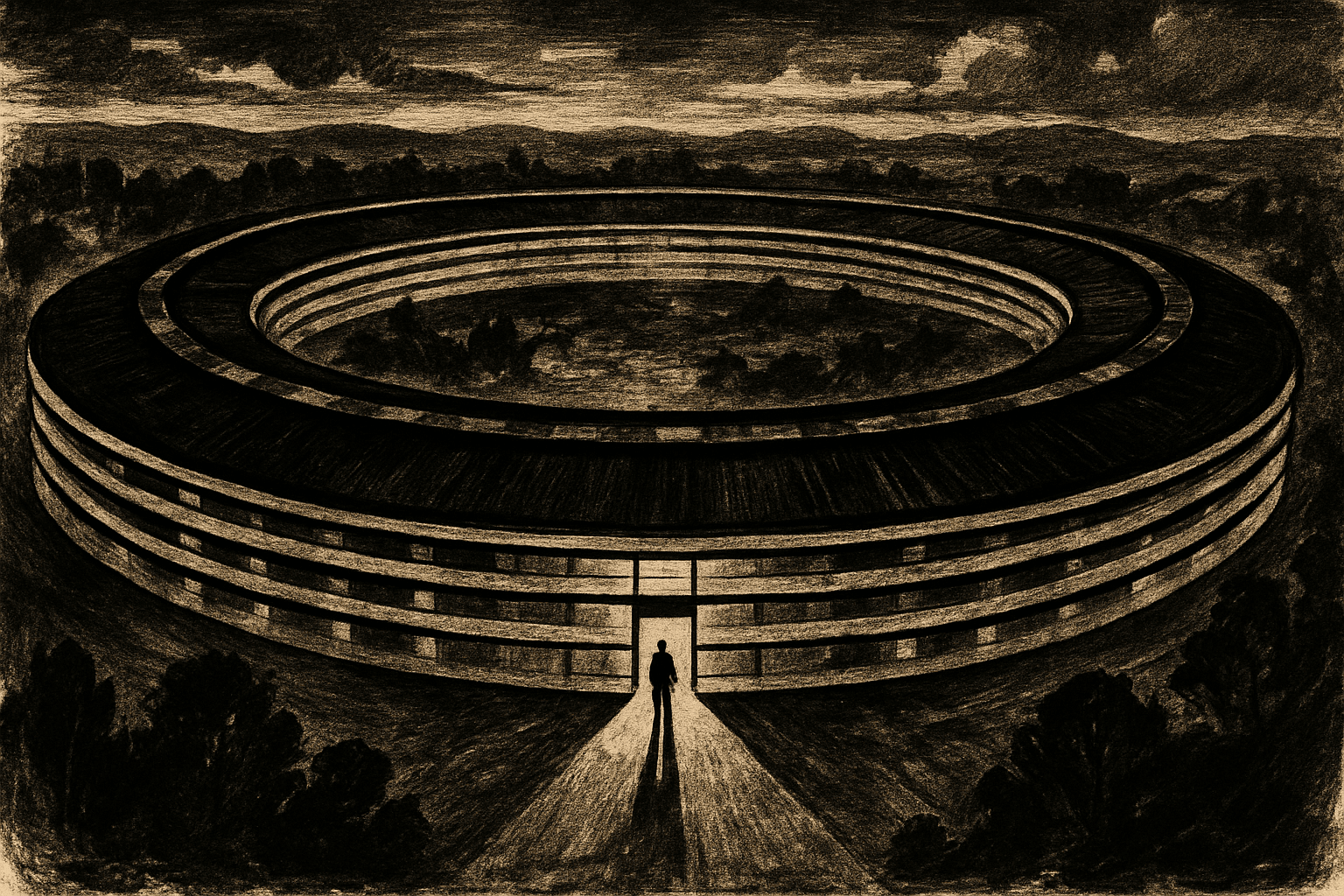
In the end, it came with the quiet confidence of a company that has done this before. Apple announced Monday that Tim Cook will step down as chief executive on September 1, 2026, after fifteen years leading one of the most valuable businesses in human history. John Ternus, 51, the company's senior vice president of hardware engineering, will succeed him. Cook will remain as executive chairman, continuing to engage with policymakers - a role that suits him, and one that keeps his particular brand of diplomatic institutional knowledge in the building.[1]
The timing is deliberate to the point of elegance. September 1 places the annual iPhone event - Apple's most-watched moment of the year - squarely in Ternus's hands from day one.[2] This is not a coincidence. It is a statement of intent.
What Cook Actually Built
Cook's tenure tends to get framed as a period of stewardship rather than creation - the operations genius who kept the machine running after Jobs. That reading undersells it considerably. When Cook took the CEO role in August 2011, Apple was worth roughly $350 billion. It crossed $1 trillion in 2018, $2 trillion in 2020, $3 trillion in 2022, and $4 trillion in 2025.[3] Net income for fiscal year 2025 reached $112 billion - eight times the figure from the year before Cook took charge.[3]
The product record is real, too: the Apple Watch, AirPods, a spatial computing platform in Apple Vision Pro, and the pivot to Apple Silicon that remade the Mac more fundamentally than any update since the switch from PowerPC. But Cook's most consequential achievement may be structural. He built a services business - Apple Pay, Apple TV, Apple Music, the App Store - that generated $109 billion in revenue in fiscal 2025, roughly 26 percent of the company's total.[3] That recurring, high-margin revenue base is the thing that makes Apple recession-resistant in a way it simply was not under Jobs.
He also, quietly, built the supply chain architecture that allowed Apple to move faster than any consumer electronics company at scale. His expansion of Apple's presence in China added roughly 200 stores to its global network and entrenched a manufacturing relationship that Cook has now spent his final years carefully trying to diversify - a $600 billion U.S. spending commitment announced with President Trump last year being the most visible expression of that pivot.[3]
Who Ternus Is
Ternus is, in some ways, Apple's answer to its own open question. The company has struggled in the current era of generative AI - late with a revamped Siri, largely absent from the initial wave of large language models, and reliant on a partnership with Google to bring Gemini-powered tools to its devices.[3] A hardware chief running the company does not automatically resolve those problems, but it does change the internal hierarchy of ambitions.
He is not an outsider arriving with a mandate. Ternus joined Apple's product design team in 2001, worked on external Mac monitors, and spent two decades accumulating responsibility across every major product line.[4] His fingerprints are on the iPad, the M-series chip transition, AirPods, and the iPhone Air he introduced on stage at Apple's most recent keynote. When Apple's chief operating officer, Jeff Williams - once considered the likeliest successor - stepped away from operational responsibilities in July 2025, Ternus emerged by consensus, not by campaign.[4]
Before Apple, he spent four years at Virtual Research Systems working on VR headsets - experience that proved directly applicable to the Vision Pro project.[4] He graduated from the University of Pennsylvania in 1997 with a degree in mechanical engineering, and was, improbably, a competitive swimmer who holds the distinction of being an all-time letter winner for the Penn men's swimming team.[4] At 51, he is a year older than Cook was when Jobs handed him the keys in 2011 - close enough in career stage that Apple's board almost certainly drew the comparison.
"He has the mind of an engineer, the soul of an innovator, and the heart to lead with integrity and honor." - Tim Cook on John Ternus[1]
The Inheritance
Every Apple CEO inherits a specific set of bets. Jobs handed Cook a company whose iPhone had just launched and whose trajectory was still being written. Cook hands Ternus a company with extraordinary financial foundations but genuine product uncertainty: a mixed-reality platform that has not found its audience, an AI strategy that is still catching up, and an iPhone franchise that, for all its profitability, faces structural limits on growth.
What Ternus brings is credibility with the part of Apple that makes things. Johnny Srouji, the architect of Apple Silicon, is being elevated to chief hardware officer in tandem with the CEO transition - a signal that the engineering axis of the company is being reinforced, not reorganized.[1] That continuity matters. The cultural risk in any large-company succession is less about the new leader's vision than about the institutional knowledge that walks out the door when the org chart shifts. Apple has, for now, minimized that risk.
Cook's decision to stay as executive chairman, particularly in a policy-engagement capacity, is also worth noting. Apple operates under regulatory scrutiny on multiple continents - App Store antitrust proceedings in Europe, ongoing disputes over its services business, and trade tensions that directly affect its supply chain. Having Cook available to navigate those relationships while Ternus focuses on product is not a consolation prize. It is a deliberate division of labor from a company that plans carefully.
Whether Ternus can expand Apple's footprint in the areas where Cook's era came up short remains the open question. But the more immediate signal from this announcement is one of institutional confidence: a 25-year veteran taking over from a 15-year CEO, at a company that has survived, and thrived through, two of the most consequential leadership transitions in corporate history. That is not nothing.
Sources
John Ternus will replace Tim Cook as Apple CEO - Ars Technica Inline ↗
Apple Confirms Tim Cook's Successor: Why September 1 Is A Date To Watch - Forbes Inline ↗
A look at Tim Cook's 15-year legacy as CEO of Apple - TechCrunch Inline ↗
Meet John Ternus, the 51-year-old former swimming champ who will succeed Tim Cook as Apple CEO - Fortune Inline ↗
Get this every weekday.
The Omniscient Bulletin: consequential AI, explained and evaluated. 5 to 7 items a day with the take, not the recap.